By Channa Tilakarathna
Friday 22 May, 2026
John 21:15-19
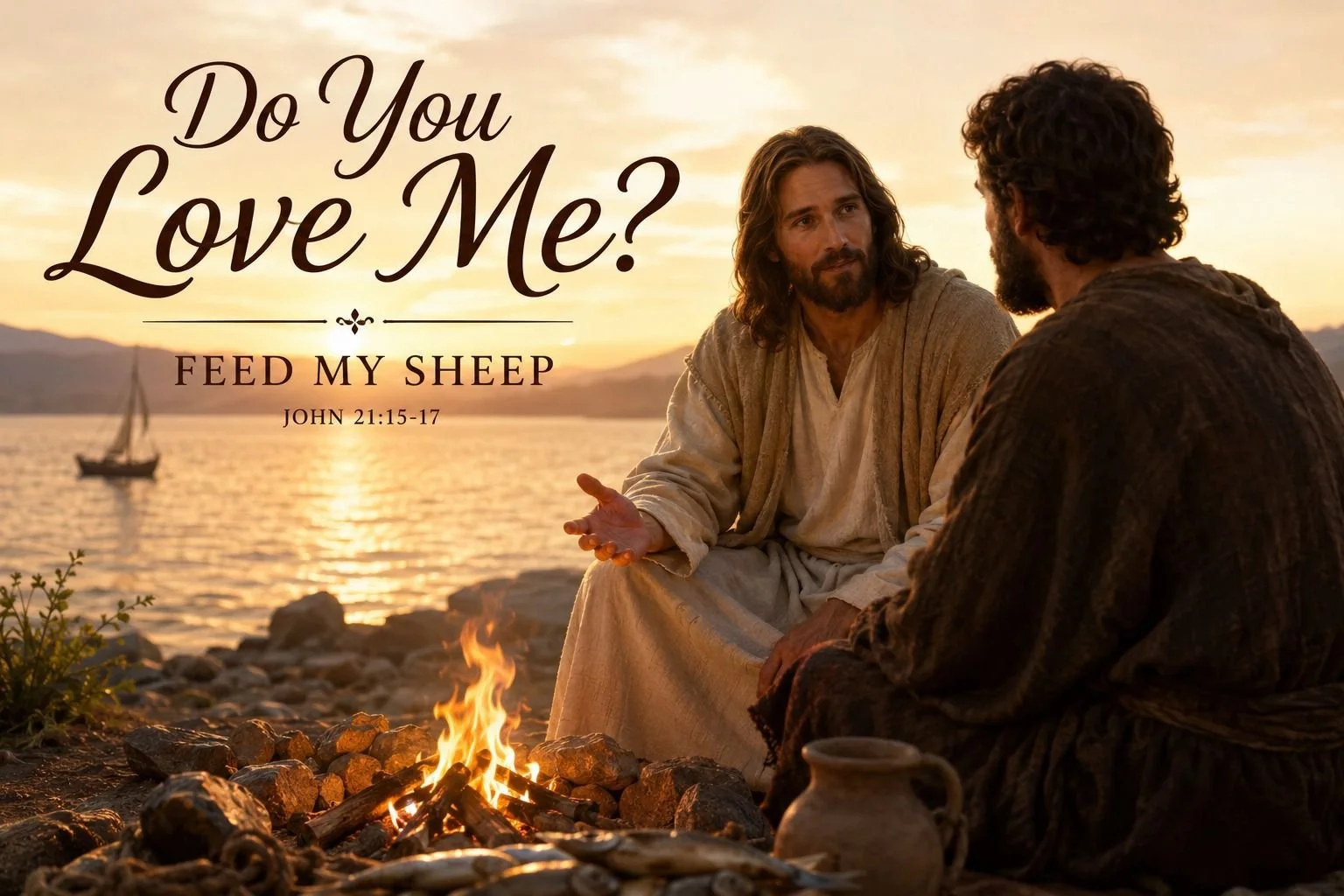
Today’s Gospel presents one of the most moving and beautiful conversations in the Gospels. After Peter’s denial during the Passion, Jesus does not reject him or shame him. Instead, beside the charcoal fire, the risen Lord asks him three times: “Do you love me?” And three times Peter answers. And three times Jesus replied. Here, Jesus entrusts him with a mission: “Feed my sheep.”
Dear brothers in Christ,
Many years ago, when I was in the seminary in Sri Lanka, I once asked my spiritual director, “Father, what is the most important quality for becoming a good priest?” As a young seminarian, honestly, I expected answers like intelligence, discipline, leadership and good preaching skills. But the priest quietly replied, “A priest must first know that he is loved by Christ.”
At that time, I did not fully understand the depth of that answer. But over the years and especially while reflecting on today’s Gospel, I began to realise how true it is. Before Peter could become the shepherd of the Church, before he could preach, lead or strengthen others, he first needed to encounter the merciful love of Jesus after his failure.
That is exactly what happens beside the charcoal fire in today’s Gospel. Jesus does not begin by reminding Peter of his denial. He does not ask, why were you weak? or why did you fail me? Instead, He asks only one question that reaches the very centre of discipleship, “Simon, son of John, do you love me?”
Today’s Gospel is not simply about Peter. It is about every disciple who has ever failed, struggled, doubted or felt unworthy before the Lord. As seminarians, we desire to serve Christ generously. We want to become faithful shepherds. Yet deep within us, we also know our weaknesses, fears, wounds, limitations and sins. Peter knew that feeling too.
Peter had once promised Jesus everything. He said, “Lord, I will lay down my life for you.” But later, in the courtyard of fear, he denied Jesus three times. Imagine the pain and shame Peter carried after the Resurrection. Perhaps he thought he had failed the Lord completely and lost his place among the disciples.
Yet Jesus comes searching for him.
This is the beauty of the Gospel: the risen Christ does not abandon wounded disciples. He restores them. He calls them again. He transforms failure into mission.
And notice something very important. Peter’s answers become humbler each time. Earlier, Peter had spoken with self confidence and boldness. But now he no longer boasts about his own strength. He simply says, “Lord, you know everything, you know that I love you.”
Peter has learned an important spiritual lesson: true discipleship is not built upon self-confidence but upon trust in the mercy of Christ. Sometimes God allows us to experience our weakness so that we stop relying on ourselves and begin relying completely on him.
Brothers, perhaps some of us or our friends also carry hidden disappointments: mistakes we regret, weaknesses we continue to struggle against, moments of spiritual dryness, fears about the future, fear of losing our loved ones. Sometimes we may wonder whether we are worthy enough to serve the Lord.
Today’s Gospel reminds us that Jesus does not call us because we are perfect. He calls us because he loves us. And he simply asks us in return: “Do you love me?”
This is the heart of every Christian vocation and especially priestly vocation. Before ministry, before preaching, before leadership, before responsibilities, there must first be love for Christ. Without love, ministry becomes only work. Without love, seminary formation becomes only routine. Without love, even prayer can become an obligation rather than an encounter.
But with love, everything changes.
When a priest truly loves Christ, people can feel it. His preaching becomes authentic, his service becomes compassionate, his ministry becomes life giving. People are not looking for perfect priests. They are looking for priests who know Christ personally, who pray sincerely, who are humble, merciful and close to the people.
That is why Jesus says to Peter: “Feed my sheep.”
Love for Christ must always become service for others. A shepherd is not called to feed himself but the flock entrusted to him. And this formation already begins now in our seminary life: in patience with one another, in community living, in small daily sacrifices, in forgiveness, in listening, in faithfulness to prayer and in learning to place others before ourselves.
Sometimes we may think priesthood is mainly about preaching well, studying theology or leading people. Those things are important. But today’s Gospel reminds us that the foundation of priesthood is much deeper. The real foundation is a personal relationship with Jesus Christ.
If we remain close to him, he will guide us. He will strengthen us. He will heal our wounds. And He will use even our weaknesses to become instruments of his grace.
One message to remember today is this: Jesus does not call us because we are perfect. He calls us because he loves us and asks us to love him in return.
Brothers, our future ministry will not stand merely on talents, academic success or abilities. It will stand on our relationship with Christ. If we stay close to him, he will teach us how to feed his sheep with compassion, humility and love.
So today, let us hear Jesus personally asking each one of us: “Do you love me?”
And may our whole life become Peter’s humble answer: “Lord, you know everything, you know that I love you.”