By Deacon Rhys Lowther
Tueday 21 April, 2026
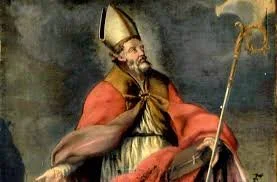
Memoria of St Anselm of Canterbury
Among the Archbishops of Canterbury, we might say that St Anselm is he “than which a greater cannot be thought!” St Anselm of Canterbury gave us the standard definition for theology as “faith seeking understanding (fides quaerens intellectum)” and is commonly called the “Father of Scholasticism,” demonstrating the harmony between faith and reason.
St Anselm teaches us that faith is the starting point of theology: “the full submission of intellect and will to God who reveals, and freely assenting to the truth revealed by Him” (Dei Verbum, n. 5). Faith is the true light of the intellect and the prelude to the beatific vision. “Without faith,” says Hebrews, “it is impossible to please God” (Heb 11:6). By faith we surrender our reason to God – who is Truth Itself – and in return receive it back enlightened and purified to understand both natural supernatural truths. Faith is not a leap into what is unintelligible, but into what is super-intelligible. Theology begins with faith and enlightens the reason. St Anselm said, “I do not seek to understand in order that I may believe, but I believe in order to understand.”
Faith enlightens reason, and it is interesting how when faith is abandoned, reason suffers. Sunday was the 21st anniversary of the election of Pope Benedict XVI. He spoke strongly about the “dictatorship of relativism.” In contrast with faith seeking understanding, the starting point is the ego, doubt and scepticism about objective truth, leading to an ideology divorced from reality. It does not surrender to the truth, but seeks to determine it. It is no coincidence that a “post-Christian” world quickly becomes a post-rational world where we see confusion about some of the most basic notions about life, the family and human nature. In the words of Vatican II, “When God is forgotten … the creature itself grows unintelligible” (Gaudium et Spes, n. 36). When faith is abandoned, reason suffers.
For St Anselm, scholastic theology was not cold and lifeless, but a means to fall in love with God. We can only love that which we know. Thus, theology allows us to better know the God who reveals Himself, that we may respond to Him with love. Theology begins in faith, but is perfected in charity. The Collect of today’s Mass captures this relationship between faith, understanding and love. We prayed, “that our faith in you may so aid our understanding, that what we believe by your command may give delight to our hearts.”
In light of his recent anniversary, we might recall that Pope Benedict XVI, like us, spent many decades of his life dedicated to studying, teaching and defending the Faith. Yet on his death bed, his final words were simply, “Lord, I love You.” May that be our aspiration as we take up our studies today and, by the prayers of St Anselm, better believe and understand the One who loved us first.